Published on: August 24, 2026
Children do not learn only from what we tell them; they learn by observing how we behave. The habits and attitudes of adults at home and at school play an important role in shaping a child’s personality. Therefore, if we want to give children a better future, we must first become the example we want them to follow.
We often tell children to develop good habits, spend less time on mobile phones, read books, respect elders and help others. But have we ever stopped to think about how much children actually learn from these instructions—and how much they learn simply by watching us?
I strongly believe that children learn more from our behaviour than from our words. They learn what they see around them.
I have experienced this closely with my own children. When I use my mobile phone, my son naturally becomes interested in it too. But when I put the phone aside and sit down to read a book, after some time he often comes and tries to look at the book or read with me. At that moment, I realise that I did not give him a long lecture about the importance of reading. He simply saw me reading and wanted to follow the same habit.
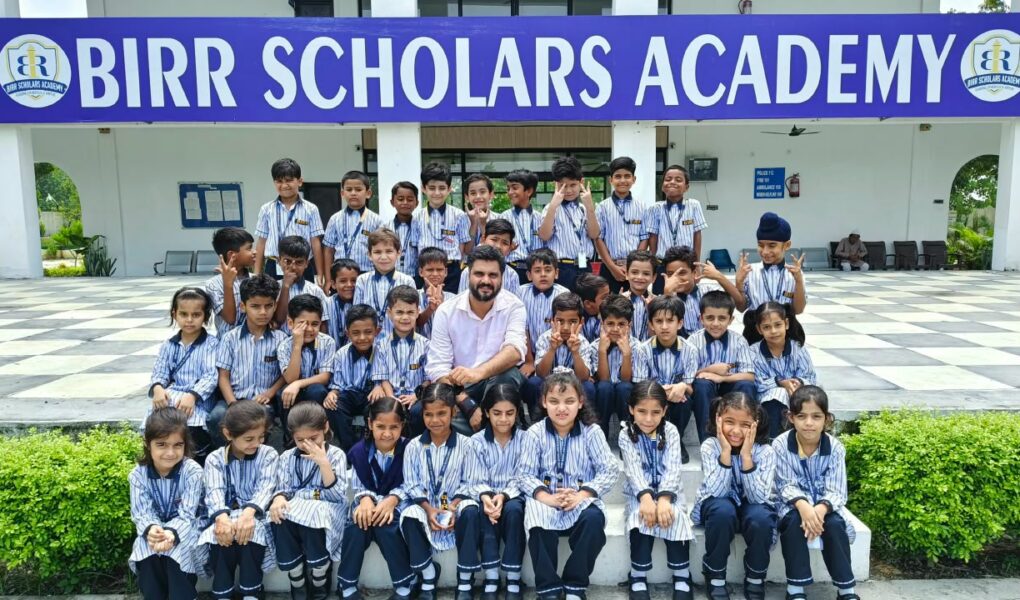
I have witnessed the same principle many times at school. Children are highly observant. They watch their teachers and other adults very carefully. They notice how teachers speak to students, how they respond when a child makes a mistake, how they help someone in need and how enthusiastically they participate in different activities.
When teachers are punctual, children gradually develop an understanding of the value of time. When teachers are enthusiastic about books and learning, children are more likely to develop an interest in reading and learning. Similarly, when parents respect each other, communicate calmly and create a positive environment at home, children begin to see that behaviour as natural and learn from it.
This lesson has become even more important in today’s digital age. Mobile phones and social media have become a part of children’s lives. Simply telling children, “Do not use your mobile phone,” may not be enough. If a child constantly sees adults around them using their phones, it is natural for the child to find them attractive.
Instead, if children see us reading books, playing, having meaningful conversations and learning something new, they are more likely to become interested in those activities themselves.
Education, therefore, is not limited to classrooms and textbooks. Home, school and society all contribute to shaping a child’s thinking, values and personality.
For me, the greatest lesson is simple: if we want children to become good human beings, giving them advice alone is not enough. We must become the example we want them to see.
Children may forget our words, but the lessons they learn by observing our behaviour can become a lasting part of their personality.
That is why every parent and teacher should ask themselves an important question:
Before asking, “What am I teaching my child?” we should ask, “What am I doing in front of my child?”
Because children are not only our future; they are also a reflection of our present. What we show them today may become visible in their behaviour tomorrow.
Muqarrab Hadi
Educationist & School Director