Published on: August 25, 2026
For years, cricket has been the undisputed king of Indian sport. The IPL turned it into a nightly spectacle, packed with cheerleaders, fireworks, and crores of rupees changing hands over a six hit. But something is shifting. Ask any young Indian sports fan today, and you’ll hear a familiar complaint: a four-hour match is a big ask in a world of fifteen-second reels and shrinking attention spans. Cricket isn’t going anywhere, but the appetite for something faster, sharper, and more intense is growing. That gap is exactly where the International Boxing League (IBL) wants to land its punch.
A League Designed for a New Generation
The IBL is pitching itself as India’s first true franchise-based professional boxing league, and the timing feels deliberate. Boxing, by nature, is a sport of short bursts and instant drama. There’s no rain delay, no slow middle overs, no waiting around for the game to pick up. Two fighters step into the ring, and within a few rounds, the crowd knows exactly what’s at stake. For a generation raised on quick content and instant gratification, that kind of energy is a natural fit.
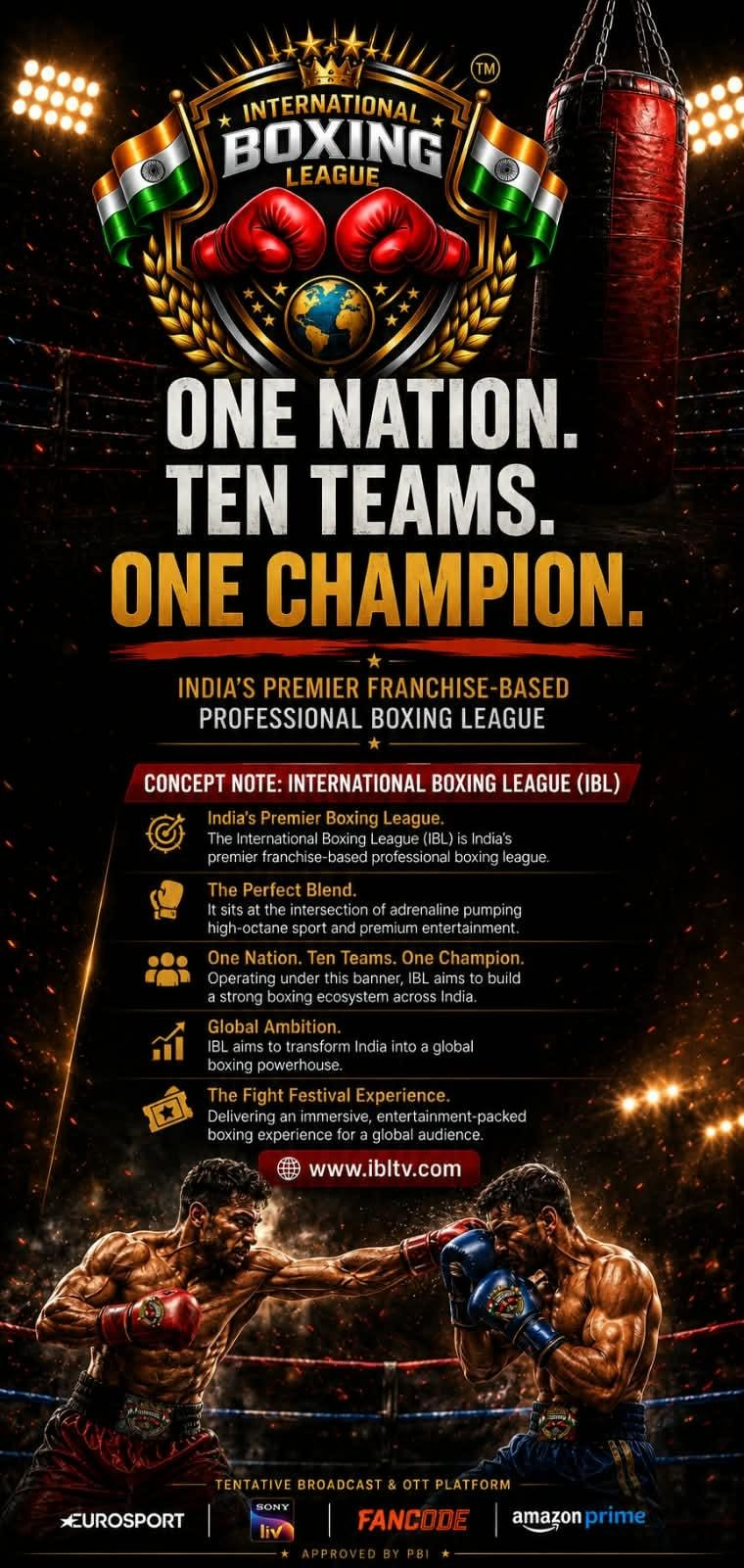
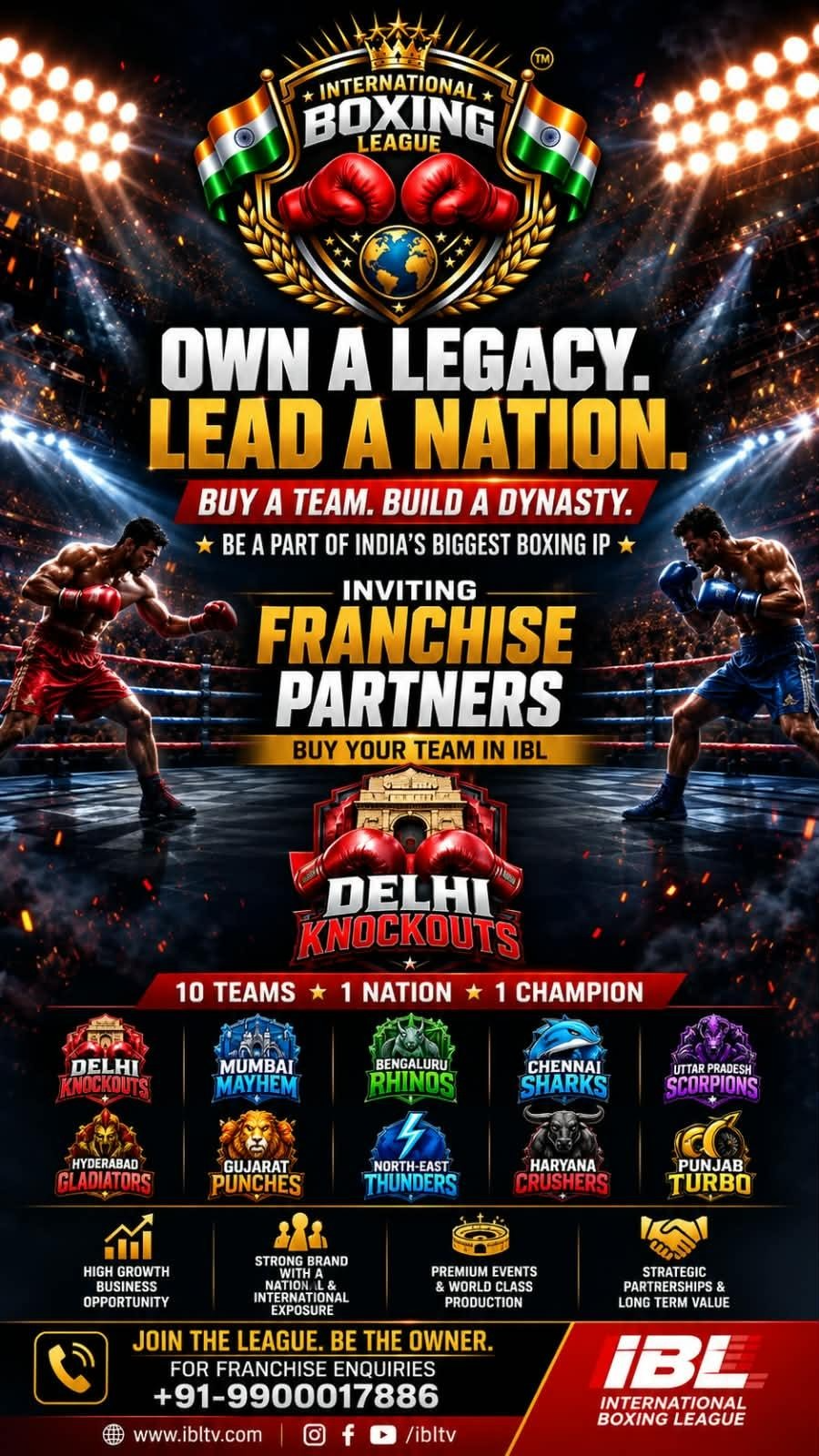
The league’s tagline says it all: One Nation. Ten Teams. One Champion. Ten city and state-based franchises will compete, each carrying the identity of its region: Delhi Knockouts, Mumbai Mayhem, Bengaluru Rhinos, Chennai Sharks, Uttar Pradesh Scorpions, Hyderabad Gladiators, Gujarat Punches, North-East Thunders, Haryana Crushers, and Punjab Turbo. Every team will field eight boxers, split evenly between featherweight and heavyweight categories, giving fans variety in speed, power, and style across every fight night.
The Value of International Boxing Talent
Here’s where the IBL’s structure gets genuinely interesting. Half of every roster will be Indian talent, and the other half will be international boxers. On the surface, that might sound like the league is diluting its “Indian” identity. In reality, it’s probably the smartest part of the whole plan.
Indian boxing has real potential; the country has produced world-class names in the amateur and Olympic circuit, but professional boxing at the highest level is still a young industry here compared to countries with decades of established boxing culture. Sharing a ring, a locker room, and a training camp with experienced international fighters gives young Indian boxers something no amount of domestic competition can offer: exposure to different styles, defensive techniques, and fight IQ that’s been sharpened on bigger global stages.
This is where the Olympic angle becomes impossible to ignore. India has chased boxing medals at the Olympics for years, with flashes of brilliance but not the consistent depth that boxing powerhouse nations bring. A league where Indian fighters regularly trade punches with seasoned international pros, under professional conditions and real pressure, is exactly the kind of environment that builds fighters capable of competing, and winning, on the world’s biggest stage. If the IBL delivers on this promise, its impact could stretch far beyond entertainment and into India’s medal count at future Olympic Games.
More Than a Boxing League
The IBL isn’t positioning itself as just a sporting event. It’s calling its format a “Fight Festival” experience, blending boxing with live entertainment, star performances, and interactive fan engagement built around the fights. Think less “quiet stadium watching two men box” and more “concert energy meets combat sport.” That combination, sport plus spectacle, is precisely the formula that made the IPL a cultural phenomenon in the first place, and the IBL seems to be borrowing that playbook while trading bat and ball for gloves and a ring.
The competition structure is designed to be intense and easy to follow. The season runs as a tightly packed seven-day campaign, moving from a preliminary league stage straight into a grand finale, with more than thirty bouts across the tournament. Each tie between franchises features two bouts across different weight categories, keeping the action fast and the stakes clear. There’s no ambiguity about how a team is progressing, which makes it far easier for new fans to jump in without needing to understand years of sporting history first.
Building Credibility Through Strong Partnerships
None of this would matter much without legitimacy behind it, and the league appears to have that covered. The IBL is sanctioned by Professional Boxing India (PBI), which lends it the official backing needed to be taken seriously by athletes, sponsors, and broadcasters alike. On the broadcast side, tentative partnerships with names like Eurosport and Sony LIV, alongside an OTT presence through FanCode and Amazon Prime, suggest the league is aiming for both traditional television reach and the digital-first audience that streams everything on their phones.
Beyond its commercial ambitions, the league is also placing a strong emphasis on integrity and governance. To ensure the competition is conducted with the highest standards of fairness and transparency, the IBL has established three independent oversight bodies: an Ethics Committee, an Anti-Doping Committee, and an Anti-Bribery and Anti-Corruption Committee. These committees comprise former IAS and IPS officers, retired armed forces personnel, and former judges, bringing decades of administrative, legal, and disciplinary expertise to the league. Their independent oversight is designed to safeguard the credibility of the competition, uphold sporting ethics, and ensure a level playing field for every athlete and franchise.
The league is also opening its doors to franchise ownership, inviting investors to buy and build teams from the ground up, much like the early days of the IPL, when franchise owners weren’t just buying a team; they were buying into the early stage of a sporting revolution.
Can Boxing Build a New Sporting Following?
Whether the IBL becomes the next big thing in Indian sport or simply a strong regional experiment will depend on execution, the quality of fights, the strength of marketing, and whether young fans genuinely show up. But the ingredients are all there: a fast, high-energy format built for short attention spans, a genuine pathway for Indian boxers to sharpen their skills against international competition, robust governance mechanisms to preserve the integrity of the sport, and an Olympic dream that finally has a domestic stage to train on. Cricket isn’t losing its throne overnight. But for the first time in a long while, it has real competition for India’s sporting attention, and it’s wearing boxing gloves.