Published on: September 1, 2026
A food-processing line depends on heat at more stages than people may realise. Ingredients may need to be warmed before mixing. Liquids must be kept at the right temperature as they move through pipes. Some products need to be cooked, dried, pasteurised, sterilised, or sealed before they leave the plant.
Each step has a different heating need. A tank of edible oil cannot be heated in the same way as an oven chamber or a packaging nozzle. The temperature also needs to be maintained in the required range. Too little heat may impede the process, or impact food safety. Too much heat can change the taste, colour, moisture or texture of the product.
This is where industrial heaters come into the production system. Liquids, air, tanks, pipes, machine parts and processing equipment are heated. The heater has to be compatible with the material that is being handled, the size of the equipment and how the heat has to be transferred.
Industrial Heaters Support Consistent Product Quality
Consistency matters in food production. A customer expects the same product each time, whether it is a sauce, baked item, dairy product, snack, or bottled drink. Temperature has a direct effect on that consistency.
Consider a thick sauce moving through a heated line. Should the temperature go down, its current could slow. The mixture and the filling may be made less consistent. “If it gets too hot, the flavor or texture may be different.
The same problem is faced while drying. Uneven heating can leave one batch too moist and the next too dry. Poor temperature control in baking or cooking equipment can lead to uneven colour or under-processed products.
Industrial heaters help the equipment to retain the heat required for every stage. The heater itself is only part of the system. The end result will depend on the design, wattage, surface loading, placement, sensor and controller. When these parts are matched properly, operators gain better control over the process.
Different Food Processes Need Different Heater Types
Immersion Heaters for Liquids and Tanks
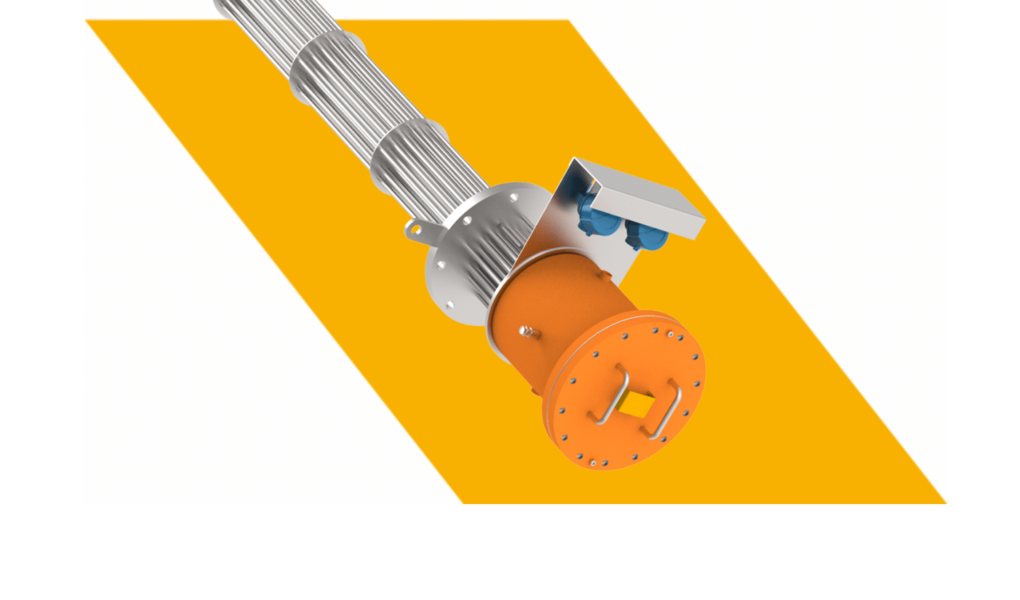
Immersion heaters are placed directly in the liquid being heated. This makes them suitable for tanks and vessels where heat must be transferred into water, edible oils, cleaning liquids, or other process fluids.
Tempsens identifies edible-oil heating as one of the applications for its immersion heaters. The range includes designs such as screw plug, flanged, over-the-side, and other immersion-heater arrangements for different tank sizes and installation conditions.
Direct contact with the liquid can support efficient heat transfer, but the heater must be selected with care. The sheath material needs to suit the fluid. Watt density should also be considered, especially when heating thick or heat-sensitive liquids. Excessive surface temperature may cause product deposits or local overheating around the element.
Circulation Heaters for Flowing Fluids
A circulation heater is designed for fluids moving through a closed heating chamber. The fluid enters the vessel, passes across the heating elements, and leaves at a higher temperature.
Tempsens circulation heaters are listed for applications including edible-oil heating. They can be useful when a liquid needs to be heated as part of a continuous process rather than in a stationary tank.
Flow rate is an important part of circulation-heater selection. The heater capacity must be matched with the amount of fluid moving through the system, its starting temperature, and the required outlet temperature. Low flow around a high-powered element can cause overheating, while an undersized heater may fail to deliver the required temperature rise.
Tubular Heaters for Versatile Equipment Design
Tubular heaters are shaped heating elements that can be formed to suit different machines and heating surfaces. They may be used for liquid heating, air heating, ovens, cabinets, and food-processing equipment.
Their shape can be adapted to the space available. Straight, U-shaped, or formed elements may be used depending on the equipment design. Tempsens includes tubular and finned tubular heaters within its process-heater range.
Finned tubular heaters are designed to transfer heat to air more effectively. The fins increase the surface area around the element. This makes them relevant for heated-air systems, drying equipment, ovens, and ducts.
Band and Cartridge Heaters for Machine Components
Some parts of a food-processing machine need localised heat rather than a large heating system.
Band heaters wrap around cylindrical surfaces. They may be fitted around pipes, barrels, nozzles, or processing equipment that needs heat from the outside. They can help prevent products such as syrups, chocolate mixtures, oils, or thick liquids from cooling around a transfer point.
Cartridge heaters are compact elements fitted into drilled holes in metal parts. They are used where heat must be placed inside a block, mould, sealing jaw, or machine component. In food-packaging equipment, this type of focused heating can support sealing and forming operations.
Silicone Rubber Heaters for Shaped Surfaces
Silicone rubber heaters are thin and flexible. They can follow flat or curved surfaces where a rigid element may be difficult to install.
Tempsens offers silicone rubber heaters for surface-heating applications. In food plants, flexible heaters may be considered for hoppers, tanks, pipes, trays, and equipment surfaces that need freeze protection or controlled warming.
Their low-profile form can be useful where space is limited. They can also be supplied in shapes that match the heated part. Even so, the mounting method must give close contact with the surface. Gaps between the heater and equipment can create uneven heating.
Printed Heaters for Compact Heating Needs
Printed heaters place a resistive heating pattern on a thin film. Tempsens describes its printed flexible film heaters as a thin solution for uniform surface heating in compact applications.
They may suit equipment where weight, thickness, and available space are restricted. Such heaters can be designed for specific shapes and heat patterns. This makes them relevant to smaller assemblies, controlled warming surfaces, and specialised processing or packaging equipment.
What Should Be Checked Before Selecting a Heater?
- The first question is what needs to be heated. Air, water, edible oil, a viscous product, a metal block, and a machine surface all transfer heat differently.
- The starting and target temperatures come next. The plant also needs to know how quickly the material must be heated and whether the process is batch-based or continuous.
- For liquids, engineers should look at volume, flow rate, viscosity, and chemical properties. The sheath material must suit the fluid. For air heating, airflow and duct size become important. For surface heating, the shape, material, and available mounting area need to be studied.
- Electrical supply, heater wattage, temperature controls, sensor position, over-temperature protection, and cleaning access should also be planned before installation. A custom heater may be required when a standard element does not match the equipment.
Final Thoughts
Industrial heaters support many of the steps that keep a food-processing line moving. They heat liquids, maintain product flow, warm air, support cooking and drying, and provide heat for cleaning and packaging equipment.
Their value comes from control rather than heat alone. The right heater delivers the required temperature in the right place and at a rate the product can handle.
Selection should be based on the medium, temperature range, process speed, equipment design, hygiene needs, and available controls. Once these points are clear, the plant can choose a heater type that fits the actual job instead of relying on a general solution.
A properly selected heating system can support consistent batches, safer operation, cleaner processing, and fewer production delays. In food manufacturing, those gains are felt across the full line.