Published on: September 2, 2026
Two of India’s celebrated voices have come together for a devotional release that promises to be one of the most memorable musical offerings of this Janmashtami season.
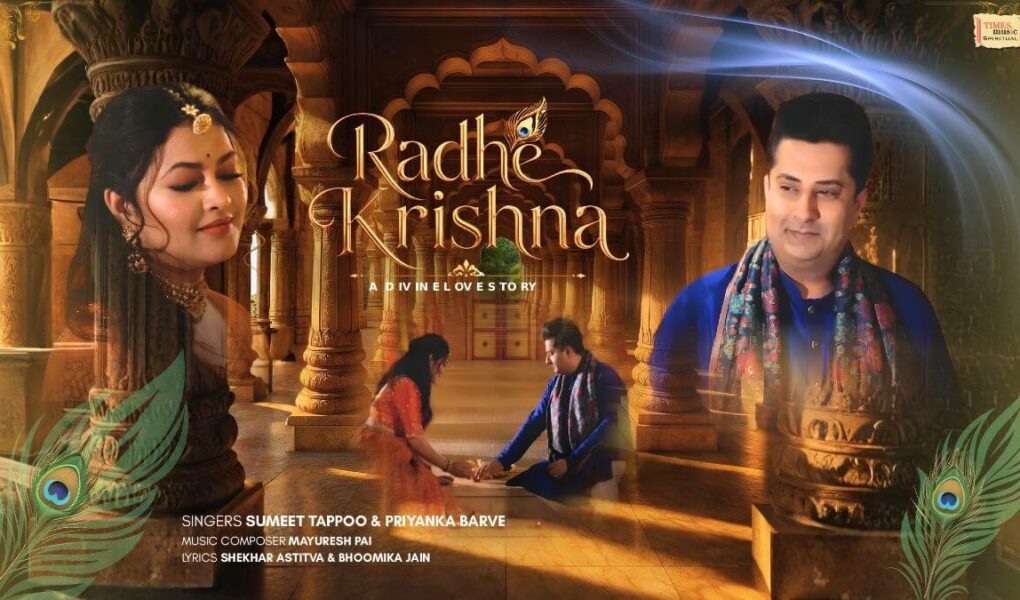
Acclaimed singers Sumeet Tappoo and Priyanka Barve have collaborated on a new devotional song “Radhe Krishna” that celebrates the eternal love between Radha and Krishna. Released for Krishna Janmashtami on Times Music, the song is composed by Mayuresh Pai and penned by lyricist Shekhar Astitwa, and brings together devotion, grandeur and emotional depth in equal measure.
At the heart of the composition is a rich orchestral arrangement anchored by a violin symphony, giving the song a distinctly cinematic quality while retaining its devotional purity. It is a sound that feels both timeless and fresh, a balance that has become something of a hallmark of both Sumeet Tappoo and Priyanka Barve’s musical work.
https://www.youtube.com/watch?v=DEPvC22qiNg
The accompanying music video, directed by Pratham Chourasiya and Nayan Pachori, transports viewers into a world of royal mystery and divine imagination. Set against the backdrop of a temple-like setting, the narrative follows Radha as she enters a majestic space and begins to dream of Krishna. What unfolds is an enchanting musical conversation between the two, beautifully blurring the line between dream and devotion. The video concludes with Radha awakening to the realisation that her encounter with Krishna existed only in her imagination, yet the emotion of that meeting lingers, suggesting that the devotion itself is eternal.
The creative soul of “Radhe Krishna” lies in the coming together of composer Mayuresh Pai and lyricist Shekhar Astitwa, who have crafted the song to reflect both the grandeur and the spiritual intimacy of Radha and Krishna’s eternal bond. Pai’s composition brings together sweeping orchestration, a powerful violin symphony and a deeply devotional melodic framework, creating a sound that is cinematic yet rooted in Indian musical sensibility.
Lyrics by Shekhar Astitwa and Bhoomika Jain’s lyrics complement the music with poetic imagery and emotional depth, portraying divine love not merely as romance, but as a profound journey of surrender, longing and devotion. Together, their music and words give “Radhe Krishna” its distinctive emotional and spiritual identity.
Sumeet Tappoo, speaking about the collaboration, describes the composition as something special from the moment he first heard it. “When Mayuresh Pai Ji gave me this beautiful composition, I immediately felt there was something very special about it. It was a pleasure to collaborate with Priyanka Barve for the vocals. We have all worked hard to humbly try and create a rich musical masterpiece that celebrates the beauty and purity of Radha and Krishna’s divine love. From the music to the visual treatment, every aspect has been crafted with immense love,” he says.
Priyanka Barve echoes that sentiment warmly. “There is something incredibly beautiful about singing about the love of Radha and Krishna because it goes far beyond ordinary love. It is pure, eternal and deeply spiritual. Working with Sumeet, Mayuresh Ji and the entire team on this song was a wonderful experience, and the video has brought another dimension to the song altogether,” she comments.
Composer Mayuresh Pai speaks about the musical intent behind the composition. “I wanted to create something devotional for Krishna Janmashtami, but also give it a musical identity that felt fresh and different. The composition has a certain grandeur, but at its core it remains deeply devotional and pure. Sumeet and Priyanka have brought so much emotion and depth to it,” he remarks.
Creative Heads Geetesh Yadav and Parth Dubey describe the visual ambition behind the project. “We wanted the music video to feel like Radha had stepped into another world, one that was royal, mysterious, dreamlike and divine,” says Geetesh. Parth adds that it was because of this that “the visual treatment is deliberately grand, but the emotion remains intimate.”