Published on: October 5, 2026
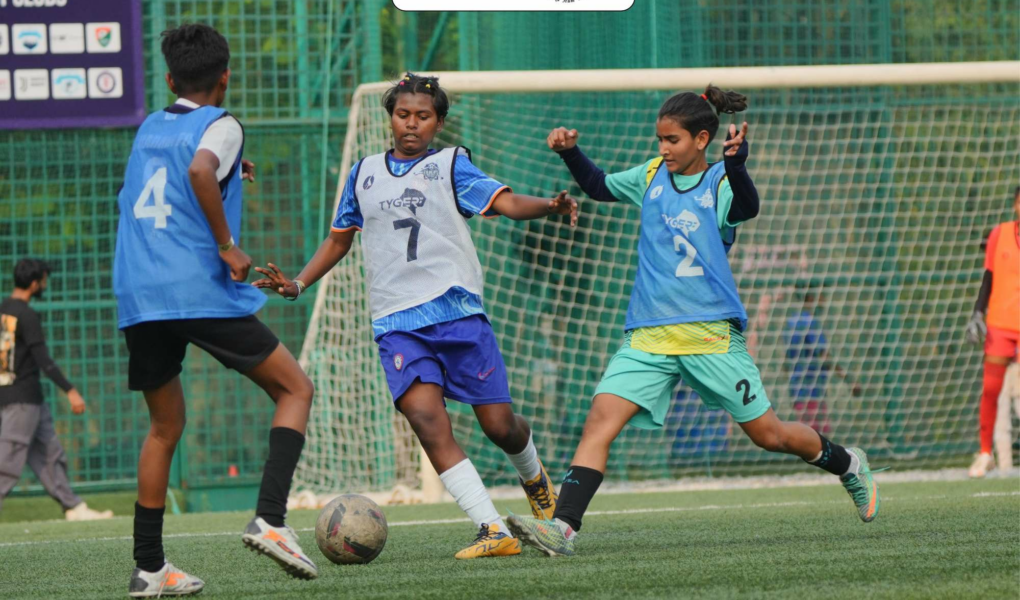
After taking Tyger-IKF Naari Shakti to 11 locations across Rajasthan, Bihar, Tamil Nadu, Maharashtra and Uttar Pradesh, India Khelo Football (IKF) is using grassroots research to understand the aspirations, barriers and opportunities shaping the next generation of women in football.
Football can be the starting point—but for girls, the journey cannot end with simply getting onto the field.
Through Tyger-IKF Naari Shakti, IKF has conducted girls-focused football assessment camps and awareness sessions across India while gathering grassroots insights from girls and their families. The research dataset currently captures 477 responses across six locations, offering a deeper understanding of what young girls need to participate, progress and remain connected to sport.
A key finding is the strong willingness to continue football. In Dhingsara, 101 of 106 respondents wanted to continue playing seriously; in Siwan, all 17 respondents expressed the same intent; and in Bikaner, 36 of 37 said they wanted to continue seriously. In Pune and Jaipur, 128 of 152 respondents said they wanted to pursue football after their IKF experience.
However, aspiration does not always translate into access. Lack of opportunities emerged as a key barrier in Pune, while Jaipur respondents also identified financial constraints, education pressure, safety concerns and family pressure. In Pune, 15 of 18 respondents who answered the question said they needed financial or job support; in Jaipur, the figure was 112 of 122.
The research also highlights the importance of safe and comfortable environments. In Jaipur, 102 of 104 respondents said an all-female environment helped them participate, while 96 reported feeling comfortable or very comfortable with their safety experience during the IKF session. Similar responses were recorded in Siwan and Dhingsara, reinforcing the importance of creating spaces where girls feel confident to participate.
Awareness of football pathways remains uneven. In Dhingsara, while all 106 respondents knew girls could build careers in football, only 67 said they knew how to become a professional player. Awareness of pathways such as IWL and IWL2 also varied across locations.
Importantly, girls are looking beyond playing professionally. Among respondents in Pune and Jaipur, coaching, sports psychology, refereeing and physiotherapy emerged as areas of interest. This directly supports IKF’s Pathway 360 approach—creating opportunities to remain connected to football through careers both on and beyond the pitch.
Parents remain an important part of this journey, with education, safety and mixed playing environments influencing their comfort in some communities.
The research also brings attention to menstrual health and women’s well-being. In Siwan, 12 of 17 girls said periods affected their football participation, while 10 had considered stopping or taking a break because playing during periods could be difficult. In Dhingsara, 60 respondents said they felt hesitant discussing periods with a male coach.
Together, these findings reinforce IKF’s belief that evidence-led programming must address the complete ecosystem around a girl—not just her access to a football field. Naari Shakti aims to use these grassroots insights to build safer, more informed and more sustainable pathways for girls to participate, progress and find their place within football.
With Tyger Capital’s support, Project Tyger-IKF Naari Shakti reaches to maximum female players and the deeper understanding of what does a next gen female football player need Padmaja Bhagat, Chief Human Resource Officer, Tyger Capital, said:
“At Tyger Capital, we firmly believe that talent is universal, but access to opportunity is not. Project Tyger IKF Naari Shakti is helping bridge that divide by creating safe, supportive and structured environments where young girls can learn, grow and realise their potential.
While football is the medium, the impact extends far beyond the game. The initiative is fostering confidence, leadership, discipline, resilience and a strong sense of belonging—qualities that empower young women to succeed in every sphere of life.”
PRIYANKA AJIT, Founder, AU LEAVES, Naari Shakti Madhya Pradesh Female Well being Partner said:
“We at Auleaves Freedom Circle Foundation are happy to partner with India Khelo Football to support girls and women football players across Madhya Pradesh for upcoming Scout On Wheels MP campaign with menstrual health education, awareness and support. We want every footballer to have the confidence and support to manage her periods while she trains, plays and competes. Her period should never decide whether she gets to step onto the field.”
NIRJA SHEKHAWAT, PROJECT LEAD, IKF NAARI SHAKTI, said:
“Our research shows that the gap for girls in football goes beyond access to a football ground. Confidence, family support, awareness, financial literacy, health and pathways beyond playing all shape whether a girl can continue in the sport. That is why evidence-led programming is central to Naari Shakti we listen to girls and their families, use their insights to shape our interventions, and measure the change we create. Our vision is simple: to help every girl find a pathway into football and see a future for herself within the game, on or beyond the pitch.”
For IKF, these findings are more than statistics. They provide a roadmap for designing interventions around the real needs of girls and their communities—from safe sporting environments and menstrual health to financial support, parental engagement, career awareness and opportunities beyond playing.
The journey across 11 locations has reinforced a simple message: when girls are given access, information, confidence and a pathway forward, football can become much more than a game.
Naari Shakti is building that pathway—by the girls, for the girls, of the girls.