Published on: September 16, 2026
New Delhi, September 2026 — As India establishes itself as a global digital powerhouse, it’s important to remember the pioneers who first transformed lived experiences into the data that now powers progress. Before big data became a buzzword, dedicated researchers like Dr. Zaheer Khan walked through villages, entered homes, spoke with families, and documented the realities that statistics would later represent.
Dr. Zaheer Khan was one of them.
For over three decades, his work has spanned villages, national surveys, public health programs, and policy frameworks across Bharat.
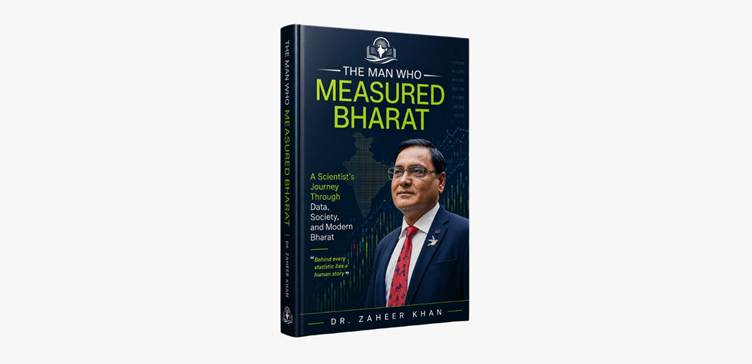
Now, Dr. Khan is set to launch his much-anticipated book, The Man Who Measured Bharat, sharing insights from decades of research that have shaped national conversations on health, society, and evidence-based policy.
Beyond the Numbers
India is one of the most studied societies in the world. Each year, millions participate in surveys measuring health, education, fertility, employment, and social change.
But behind every number is a person.
Behind every statistic is a real person—a mother, a patient, or a family—whose experiences shape the data.
This human dimension sits at the heart of The Man Who Measured Bharat.
Dr. Khan’s expertise has powered some of the most influential research and public health initiatives in India. He played a key role in landmark surveys like NFHS-2 and NFHS-3 and collaborated with global institutions such as IIPS, UNICEF, PATH, DHS Programs, the University of North Carolina, and Family Health International—helping put India’s data on the world map.
At FactIndepth Research & Development India Pvt. Ltd., Dr. Khan has led large-scale surveys, policy evaluations, and social research across Bharat—driving evidence-based change and setting new standards for research excellence.
The result is a perspective that is both scientific and deeply human.
A Career Built in the Field
For Dr Khan, research was never simply about sitting behind a desk and analysing datasets.
It meant going into the field.
It meant listening.
It meant understanding how ordinary citizens actually experience government programmes, not just what policy documents intended.
This experience gave him a distinctive view of India’s development story.
The India in national datasets often differs from the India experienced by families, patients, and communities on the ground.
The Man Who Measured Bharat attempts to bring these two Indias together.
Measuring a Nation, Understanding Its People
The book offers a rare, inside look at the intersection of public health, population science, data, governance, education, social development, and grassroots realities—providing readers with a fresh perspective on the forces shaping New India.
But its larger question is much more fundamental:
Can a country truly be understood by numbers alone?
Dr Khan’s answer is no.
Numbers are essential. They let societies see patterns, identify inequalities, evaluate programmes, and make better decisions. But numbers become meaningful only when they are connected to human experience.
This is why the book moves beyond statistics to examine the systems, people and stories behind them.
It reflects on how data has influenced policy and why evidence-based development needs both science and empathy.
From Surveys to Systems
Over the course of his career, Dr Khan witnessed India’s transformation up close.
He saw India’s public health systems grow, population patterns shift, and data become central to policymaking.
He also saw the limitations.
No survey, however large, can capture everything.
No dataset can completely describe the complexity of a family.
No indicator can fully capture aspiration, dignity, or resilience.
That tension—between what can be measured and what must be understood—is one of the central ideas running through The Man Who Measured Bharat.
A Personal Journey Through a Changing Bharat
At another level, the book is deeply personal.
It is the story of a professional life shaped by curiosity, discipline, field experience and a continuing desire to understand India.
From early household surveys to collaborating with global institutions, Dr Khan’s journey reflects the evolution of India’s evidence ecosystem.
The book therefore becomes more than a professional memoir.
It becomes a record of a changing Bharat.
A Bharat moving from paper-based surveys to digital systems.
From isolated datasets to increasingly sophisticated demographic intelligence.
From viewing development primarily through programmes and targets to recognising the importance of human-centred outcomes.
Why This Book Matters Now
India today is changing at a remarkable pace.
Its population and cities are changing rapidly. Technology is transforming access to information. Young Indians aspire for more, while challenges remain.
In such an environment, the ability to understand society accurately becomes increasingly important.
The Man Who Measured Bharat arrives at this moment with a simple message:
Before we can change Bharat, we must understand Bharat.
And to understand it, we need more than opinions.
We need evidence.
We need field experience.
We need institutions capable of listening.
And we need to remember that behind every number is a human being.
A Lifetime of Measuring. A Journey of Understanding.
Dr Zaheer Khan’s story is ultimately not about numbers.
It is about what those numbers taught him about people.
It is about the villages, families, institutions, surveys, and countless conversations that give meaning to the reports.
That is what makes The Man Who Measured Bharat distinctive.
It is the story of a scientist who spent decades measuring India—and, in the process, learned to look beyond the measurements.
The book invites readers to do the same.
To look at Bharat not merely as a collection of statistics, but as a living, changing society of people, communities, aspirations and possibilities.
And perhaps that is the most important measurement of all.
About the Author
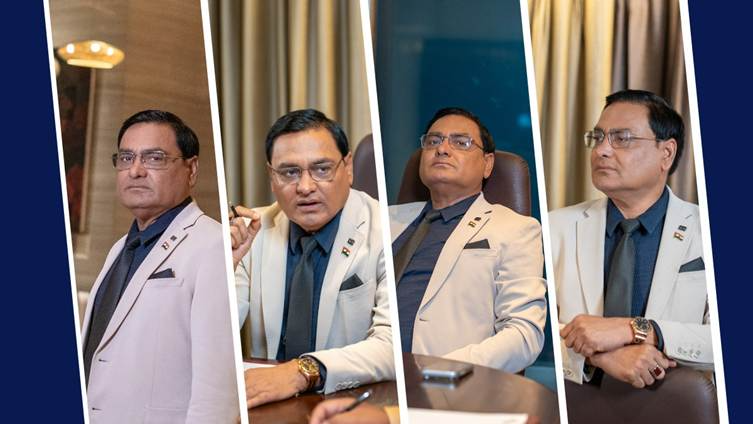
Dr Zaheer Khan is a Health & Population Scientist, social researcher, institution builder and public leader with more than 30 years of experience across public health systems, demographic research, education, governance and social development.
He has contributed to landmark initiatives including NFHS-2 and NFHS-3 and has worked with organisations and institutions including UNICEF, PATH, IIPS, DHS Programs, the University of North Carolina and Family Health International. He is also the Founder of FactIndepth Research & Development India Pvt. Ltd., through which he has led large-scale surveys, policy evaluations and social research initiatives across Bharat.
Book:The Man Who Measured Bharat
Author: Dr Zaheer Khan
Launch: October 2026
Website: drzaheerkhan.com
Media Contact
Pranshu Arora
+91 97112 96196