Published on: October 6, 2026
The next generation of pharmacy software is not simply creating invoices. It is connecting every sale with stock, compliance, purchasing and better patient service.
At a busy pharmacy counter, a bill is only the final visible step in a much larger process. Every medicine has a batch number, expiry date, tax rate, purchase history and stock position. Some sales require prescription records; others involve split payments or products drawn from more than one batch. When billing software treats these details as separate tasks, staff spend valuable time checking screens, registers and spreadsheets—and avoidable errors become more likely.
That is why the market is moving beyond generic point-of-sale tools towards purpose-built pharmacy billing software. A modern system should understand the language of a medical store. It should suggest the batch expiring first, prevent unsuitable stock from being billed, keep GST information connected to each transaction and update inventory the moment a sale is completed. The counter becomes faster not because controls are removed, but because the right controls happen quietly within the workflow.
One connected operational picture
Inventory is where this connected approach creates its clearest value. Pharmacy owners need to know not only how many units remain, but which batches hold them, when they expire and which products are moving slowly. Good pharmacy inventory management links purchasing, sales, returns, stock audits and inter-store transfers. Low-stock and expiry alerts then become practical prompts rather than reports discovered after the problem has already affected customers or margins.
Purchasing data should flow through the same chain. When goods arrive, quantities, free units, costs and taxes can be captured against the correct batch. That information can then support vendor balances, reorder decisions and margin analysis. Connecting the inward journey of a medicine to its eventual sale gives owners a clearer view of what is selling profitably, what is tying up cash and what needs attention before it expires.
Designed around pharmacy realities
Indian pharmacies also operate within a demanding record-keeping environment. GST reporting, Schedule H and H1 workflows, prescriptions, purchase returns and credit notes cannot be afterthoughts. Software should organise the relevant information as work happens, while keeping the pharmacist responsible for professional and legal decisions. Role-based access is equally important: a cashier, store manager, finance user and business owner should each see the tools and stores appropriate to their responsibilities.
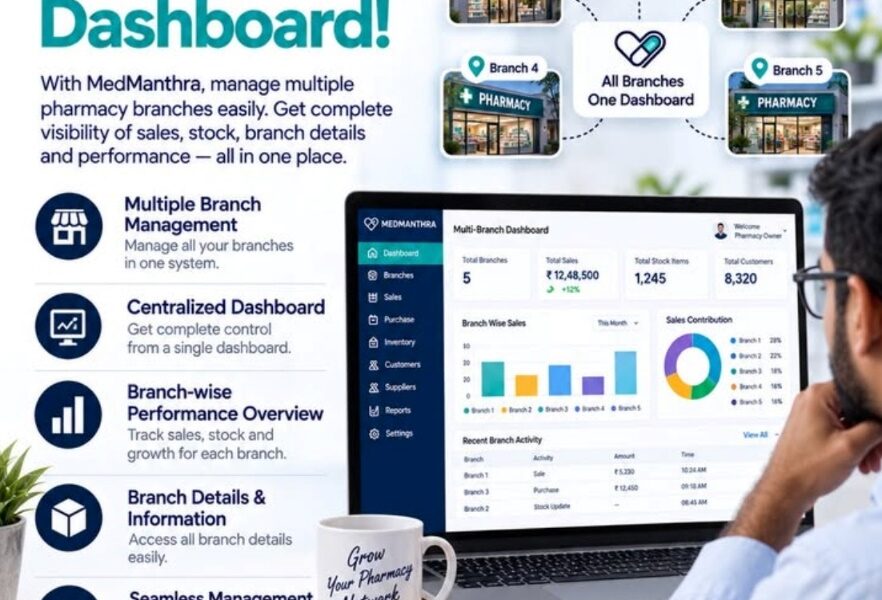
Cloud-connected systems add another advantage: visibility beyond the counter. An owner can review sales, stock, margins and day-close information without waiting for files to be sent from every branch. Multi-store pharmacies can transfer stock, centralise purchasing and compare performance while keeping each location’s operations controlled. Mobile-friendly access also helps managers respond quickly, whether they are inside the store or away from it.
Usability matters just as much as the feature list. A pharmacy counter cannot pause for complicated menus during a rush. Search, barcode entry, keyboard navigation and clear stock warnings should shorten common actions. The interface should also remain familiar enough that teams can continue selecting products by name when a pack has no code. New technology succeeds when it adds useful options without disrupting the dependable process staff already know.

Technology that supports patient continuity
The new-age pharmacy platform can also support relationships after the transaction. If staff optionally record how many days a medicine is expected to last, the system can identify customers whose refill date is approaching. A timely call or WhatsApp reminder can improve convenience for people on regular medication and create a more dependable service experience. Loyalty reporting, customer history and responsible follow-up turn billing data into useful operational insight without changing the pharmacist’s clinical role.
MedManthra reflects this pharmacy-first direction. Built by pharmacy operators for pharmacy operators, it brings billing, batch and expiry tracking, purchases, GST reporting, multi-store control and customer follow-up into one system. Its features built for Indian pharmacies show how software can be shaped around real counter and back-office workflows rather than forcing a medical store into a generic retail template.
The larger shift is simple but significant: pharmacy software is becoming an operating system for the business, not an electronic cash register. The best platforms reduce repeated entry, make stock movement easier to understand and present the right information at the moment a decision is made. For owners, that means clearer control. For staff, it means fewer disconnected tasks. And for customers, it can mean faster service and better continuity—allowing pharmacists to spend less time managing paperwork and more time serving people.
Learn more: medmanthra.com